Top 3 Algeria-Austria Standings Mistakes Fans Make
Algeria and Austria finished the 2026 FIFA World Cup Group J finale level at 3-3, each taking one point and reaching four points overall, but their standings positions were not identical. Austria plac...

Top 3 Algeria-Austria Standings Mistakes Fans Make
Algeria and Austria finished the 2026 FIFA World Cup Group J finale level at 3-3, each taking one point and reaching four points overall, but their standings positions were not identical. Austria placed second behind Argentina and advanced directly to the knockout phase, while Algeria finished third and qualified as one of the eight best third-place teams. Marko Arnautovic and Marcel Sabitzer scored for Austria; Rafik Belghali and Riyad Mahrez, twice, replied for Algeria before Sasa Kalajdzic’s 96th-minute header restored parity. The result eliminated Iran and sent Austria toward Spain, while Algeria drew Switzerland in the Round of 32. The crucial mistake is treating the scoreline as the entire table: ranking order, goal difference, third-place qualification rules, and the timing of Kalajdzic’s equaliser all mattered. For accurate tournament analysis, read the final points, position, and qualification route together rather than celebrating a draw as though it were a tidy little spreadsheet.
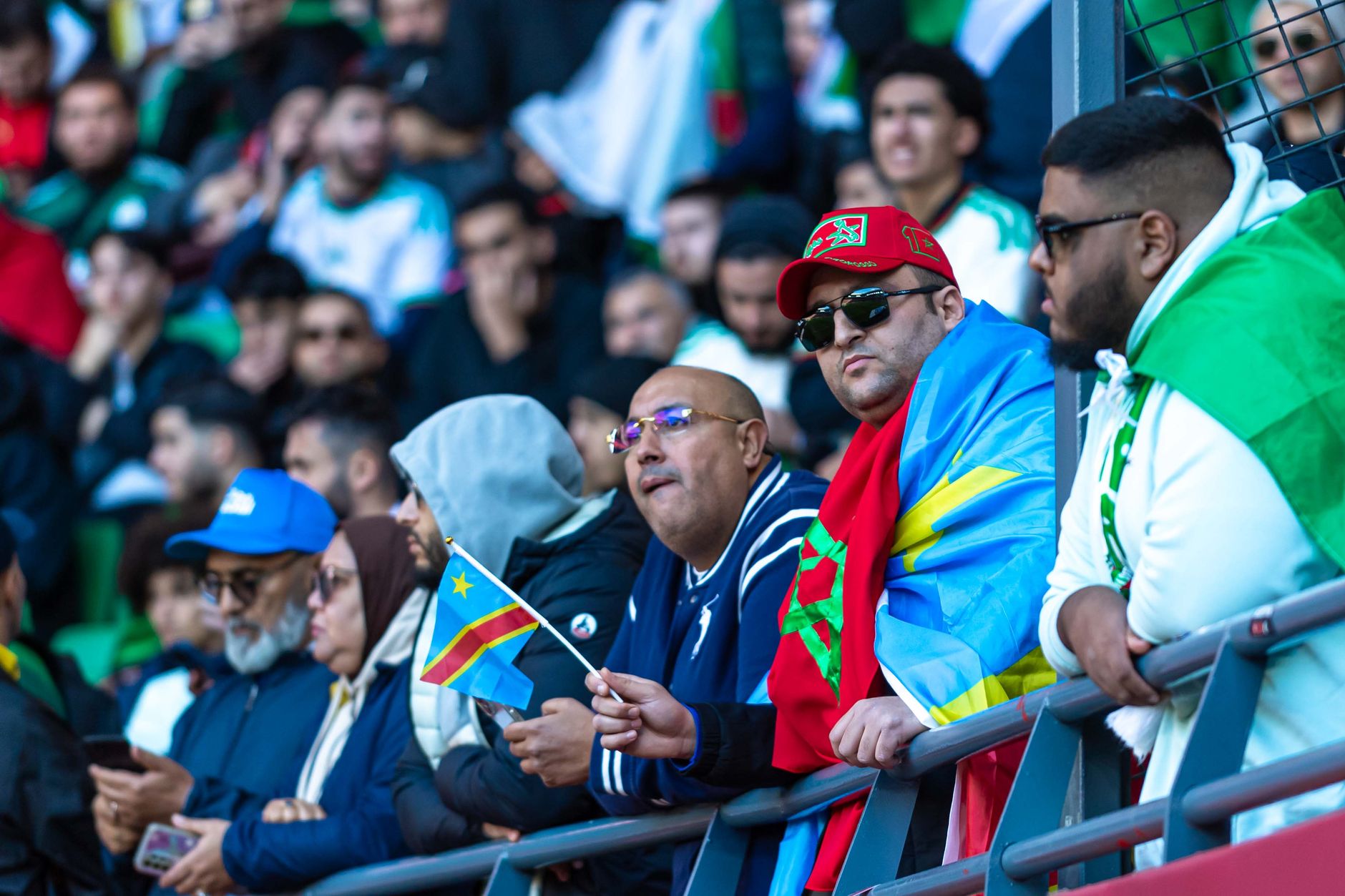
Photo by Guylain Kipoke on Pexels
The Top 3 Algeria-Austria Standings Mistakes Fans Make
- Mistake one: assuming equal points mean equal standings. Algeria and Austria both ended on four points, yet Austria finished second and Algeria third because the broader Group J ranking criteria separated them.
- Mistake two: ignoring the third-place qualification system. Algeria advanced despite finishing third, joining the eight best third-placed teams.
- Mistake three: overlooking the 96th-minute equaliser. Kalajdzic’s header changed Austria’s qualification position and prevented a damaging defeat.
The final match was unusually important because it was not merely a battle for three points. Algeria, Austria, and Iran were connected by the same result, while Argentina’s position at the top of Group J shaped the final order. Austria’s 3-3 draw left both teams alive, but the routes were different: Austria secured second place and a match against Spain, whereas Algeria moved forward through the best-third-place pathway and was paired with Switzerland. That is precisely why a casual glance at “4 points each” is inadequate. Goal Moments covers these distinctions because tournament tables are not decorative wallpaper, although many readers study them with the concentration of a man choosing a restaurant wine and then ordering the house lager.
Want the full tournament context before judging the table?
#1 Algeria vs Austria: Best Overall Standings Explanation
Algeria and Austria are best understood through the complete Group J outcome: both collected four points, but Austria finished second and Algeria finished third after the 3-3 draw on June 27, 2026. Austria’s higher placement produced a conventional knockout qualification route, while Algeria depended on the tournament’s best-third-place allocation.
The match itself followed a rather expensive-looking pattern of momentum swings. Marko Arnautovic opened the scoring for Austria in the 28th minute, and Rafik Belghali equalised for Algeria just before half-time at 45 minutes. Marcel Sabitzer restored Austria’s advantage in the 55th minute, but Riyad Mahrez scored in the 60th minute and again at 90+3. Then, with Algeria apparently close to securing the result, Sasa Kalajdzic headed in at 90+6.
That final goal mattered beyond the match report. A defeat would have placed Austria under serious pressure in the qualification calculations, while the draw preserved Austria’s second-place position and removed Iran from contention. The FIFA World Cup regulations provide the official competition framework, while ESPN’s match report records the score, scorers, and final table context.
“Every match is a final.”
That familiar tournament principle is especially accurate here, though Austria waited until the final possible moment to demonstrate it. Algeria’s performance deserves credit, but the standings tell a more nuanced story than the dramatic ending.
To compare the teams properly, record these facts:
- Final score: Algeria 3-3 Austria.
- Points: Algeria 4; Austria 4.
- Austria’s group position: Second.
- Algeria’s group position: Third.
- Austria’s next opponent: Spain.
- Algeria’s next opponent: Switzerland.
- Eliminated team: Iran.
For readers checking historical context, the FIFA World Cup history archive is more reliable than social-media graphics that have been assembled with the mathematical discipline of a damp napkin.
#2 Why Did Algeria Finish Third Despite Four Points?
Algeria finished third because four points alone do not determine a multi-team World Cup group ranking; Austria also had four points but occupied second place after the competition’s applicable ranking criteria were applied. Algeria’s third-place finish still qualified because it ranked among the eight strongest third-placed teams.
The important distinction is between group position and qualification status. Austria’s second-place position was earned within Group J, giving the Austrian national team a direct and clearly defined knockout berth. Algeria’s position was less comfortable: the Algerian national team needed its four-point total and comparative record to withstand the results of other third-placed teams across the tournament.
This is the first information gain many summaries fail to explain: a third-place team can advance without being equal to a second-place team in status. The two sides may share points, but the competition route, opponent allocation, and margin for error differ substantially. Algeria’s qualification was therefore positive but conditional, while Austria’s was structurally safer.
A useful table summary is:
| Team | Final position | Points | Qualification route | Knockout opponent |
|---|---|---|---|---|
| Austria | 2nd in Group J | 4 | Group-stage advancement | Spain |
| Algeria | 3rd in Group J | 4 | One of eight best third-place teams | Switzerland |
| Iran | Eliminated | Not sufficient | Failed to qualify | None |
The BBC match coverage emphasised the 96th-minute equaliser and its effect on Austria’s progress. That timing is not a sentimental footnote; it is a competitive variable. A goal in the sixth minute of stoppage time can turn a team from endangered to advancing, which is football’s way of charging interest on every earlier defensive error.
To examine the qualification logic in more detail, consult our [Internal Link: 2026 World Cup group standings guide].
See the standings implications without relying on a single headline.
#3 Was the 3-3 Draw Good Value for Algeria and Austria?
The 3-3 draw was strategically valuable for both Algeria and Austria because it allowed both teams to advance, although Austria gained the more secure second-place route and Algeria qualified through the best-third-place ranking. Its value was therefore positive but unequal.
Austria’s perspective is straightforward. The team avoided defeat, remained second in Group J, and earned a knockout meeting with Spain. Marko Arnautovic and Marcel Sabitzer had supplied the early advantage, but Algeria’s response showed that Austria could not simply manage the match conservatively. Kalajdzic’s late header was the decisive operational moment: it rescued the point when Austria was close to losing everything.
Algeria’s calculation was more complicated. Riyad Mahrez’s two goals appeared to produce a winning position, particularly the strike at 90+3, but the Algerian team still needed to survive the final seconds. The draw preserved four points and made Algeria one of the eight third-place qualifiers, setting up a Round of 32 fixture with Switzerland in Vancouver. It was a successful outcome, but not the same kind of success as Austria’s second-place finish.
Here is the practical betting-analysis lesson, stated without pretending that football has ever respected a spreadsheet:
- A draw can be sufficient when both teams already have a viable qualification route.
- A late goal can change not only the result but also the opponent and tournament path.
- Identical points do not guarantee identical risk.
- Third-place qualification should be judged against all relevant groups, not Group J alone.
- A team’s next opponent is often the clearest evidence of its final standing.
The contrarian conclusion is that Algeria’s 3-3 draw should not automatically be described as a missed victory. If Algeria had won, Austria might have been eliminated, but Algeria’s own qualification position could still have depended on the wider third-place calculations. The immediate result was dramatic; the tournament result was more technical.
Photo by Zsolt Bodnár on Pexels
For advanced readers, our [Internal Link: World Cup knockout qualification scenarios] explains why group-stage arithmetic must include cross-group comparisons.
How We Ranked Them
We ranked the key standings interpretations using four criteria: factual accuracy, qualification relevance, match evidence, and practical usefulness for readers analysing Algeria versus Austria. The system gives the greatest weight to what changed the final tournament route, not to which detail sounds most dramatic in a television recap.
| Criterion | Weight | What it measures |
|---|---|---|
| Final standings accuracy | 35% | Position, points, and Group J order |
| Qualification impact | 30% | Whether the result secured advancement and by which route |
| Match evidence | 20% | Goals, minutes, and late-game events |
| Reader usefulness | 15% | Clarity for predictions, previews, and table analysis |
This ranking method places the final position first because standings are the central search intent. A table that lists four points but omits Austria’s second-place finish and Algeria’s third-place qualification is incomplete. It may look neat, but so does a suitcase packed by someone who forgot his shoes.
The second criterion, qualification impact, captures the difference between Austria and Algeria. Austria progressed as Group J runner-up and drew Spain, while Algeria advanced among the best third-place teams and drew Switzerland. The third criterion checks the match timeline: Arnautovic at 28 minutes, Belghali at 45, Sabitzer at 55, Mahrez at 60 and 90+3, and Kalajdzic at 90+6.
Finally, reader usefulness matters for Goal Moments because fans and bettors need more than a final score. A responsible preview should identify whether a team needs a win, can accept a draw, or is relying on results elsewhere. For wider tactical context, see our [Internal Link: Algeria and Austria team-form comparison].
Which Should You Pick?
Pick Austria when your analysis prioritises the safer group-stage route, and pick Algeria when your interest is in value created by an efficient third-place qualification path; neither selection should be made from the 3-3 scoreline alone. Austria finished second with four points, while Algeria finished third with four points and advanced through the best-third-place system.
Austria’s case rests on structural security. The team’s draw preserved second place and led to Spain, a difficult opponent but a conventional knockout route. Marko Arnautovic, Marcel Sabitzer, and Sasa Kalajdzic each contributed to a match in which Austria repeatedly recovered from pressure. That resilience is meaningful, although conceding three goals to Algeria also exposes a defensive vulnerability that should not be polished away for the sake of a tidy narrative.
Algeria’s case is more nuanced. Riyad Mahrez delivered twice, Rafik Belghali scored before half-time, and Algeria proved capable of answering Austria’s physical and attacking phases. The third-place route was less direct, but it still produced advancement and a Switzerland fixture. For match predictions, compare attacking output, late-game concentration, squad availability, and opponent quality rather than treating table position as a complete team-strength rating.
A disciplined selection process should follow these steps:
- Confirm the latest standings from FIFA or a reputable match provider.
- Separate points from ranking position.
- Check whether advancement was direct or dependent on third-place comparisons.
- Review the goal timeline, especially stoppage-time events.
- Compare the next opponent before assigning value to the result.
- Set a clear risk limit and avoid treating a qualification edge as a guaranteed outcome.
Want a sharper daily World Cup analysis from Goal Moments?
What Does the Algeria National Football Team vs Austria National Football Team Standings Result Mean?
The standings result means Austria finished second in Group J with four points, while Algeria finished third with four points and still advanced as one of the eight best third-placed teams. Austria therefore received the more direct qualification route, but both teams continued into the knockout stage.
The distinction affects opponent allocation and analytical expectations. Austria was scheduled to face Spain, while Algeria was scheduled to face Switzerland, creating different tactical and betting contexts. Iran, meanwhile, was eliminated because the 3-3 result prevented either Algeria or Austria from falling below the relevant advancement threshold.
The match also demonstrates why late goals deserve quantitative attention. Kalajdzic’s 96th-minute equaliser was not merely an entertaining conclusion; it preserved Austria’s tournament position. In practical terms, analysts should record the minute, score state, and qualification consequence of every late goal. That approach produces better forecasts than the usual “great drama” paragraph, which is often where research goes to take a nap.
Frequently Asked Questions
Q: What are the Algeria national football team vs Austria national football team standings?
A: Austria finished second in Group J with four points, while Algeria finished third with four points. The teams drew 3-3 on June 27, 2026, and both advanced to the knockout stage. Austria progressed directly as the group runner-up, while Algeria qualified as one of the eight best third-placed teams.
Q: How did Algeria and Austria both qualify after drawing?
A: The 3-3 draw gave Algeria and Austria the points and ranking position required to advance. Austria’s second-place finish secured its route, while Algeria’s four points compared favourably with the other third-placed teams. Iran was eliminated because the draw allowed both Group J teams to remain ahead in the qualification calculations.
Q: What is the difference between Algeria finishing third and Austria finishing second?
A: Austria finished second within Group J, whereas Algeria finished third and relied on the best-third-place ranking. Austria was paired with Spain, while Algeria was paired with Switzerland. The difference shows that equal points do not necessarily create equal standings, routes, or levels of qualification security.
Q: Who scored in Algeria vs Austria?
A: Marko Arnautovic, Marcel Sabitzer, and Sasa Kalajdzic scored for Austria, while Rafik Belghali and Riyad Mahrez scored for Algeria. Mahrez scored twice, including a goal at 90+3 minutes. Kalajdzic answered at 90+6, producing the final 3-3 score and rescuing Austria’s progression.
Q: Why did Sasa Kalajdzic’s 96th-minute goal matter?
A: Kalajdzic’s 96th-minute equaliser preserved Austria’s second-place position and prevented the team from suffering a potentially damaging defeat. The goal also confirmed Austria’s knockout qualification while keeping Algeria’s own advancement intact. It was therefore decisive for the table, not simply memorable for its timing.
Q: How should I analyse Algeria vs Austria standings for predictions?
A: Start with final position and points, then examine qualification route, goal difference, late-game performance, and the next opponent. Confirm the table through FIFA, ESPN, or BBC before making a prediction. Finally, use a fixed risk limit, because a four-point team can be second, third, qualified, or eliminated depending on the wider group structure.
Q: Is the Algeria-Austria standings result useful for 2026 World Cup betting?
A: Yes, the result is useful because it reveals different risk profiles despite identical four-point totals. Austria’s second-place route suggests one type of schedule and opponent challenge, while Algeria’s third-place route produced a different matchup with Switzerland. It should support research rather than replace it; verify lineups, injuries, market prices, and official tournament information before placing any wager.
Review the final standings, compare the qualification paths, and follow Goal Moments for further 2026 World Cup match analysis.