The 2026 Fan’s Guide to College Football
College football is the NCAA-governed American football system played by university teams across the United States, with the Football Bowl Subdivision (FBS) providing the highest-profile competition.....

The 2026 Fan’s Guide to College Football
College football is the NCAA-governed American football system played by university teams across the United States, with the Football Bowl Subdivision (FBS) providing the highest-profile competition. The 2026 season includes conference races, rivalry games, bowl eligibility, and the College Football Playoff, whose championship is scheduled for January 25, 2027, at Allegiant Stadium in Las Vegas. ESPN’s 2026 schedule separates the regular season into Weeks 1 through 15, followed by bowl games and CFP fixtures, while NCAA.com supplies scores, rankings, statistics, and national news. Major entities include the Big Ten, Southeastern Conference (SEC), Big 12, Atlantic Coast Conference (ACC), Oregon, Notre Dame, and defending champion Indiana. The practical takeaway is simple: track schedule strength, quarterback availability, conference standings, and betting lines together rather than treating rankings as gospel. Rankings are useful; they are not divine revelation, despite what your uncle screams at the television.

Photo by El gringo photo on Pexels
Want a cleaner way to follow the wider sports calendar and major tournament analysis? Goal Moments focuses primarily on FIFA World Cup predictions, tactics, player statistics, and 2026 tournament coverage, while the principles of disciplined research apply across sports.
If you are new to college football: learn the structure first
College football is organized primarily through the NCAA, with the FBS and Football Championship Subdivision (FCS) forming the two best-known Division I football levels. FBS programs pursue bowl qualification and the College Football Playoff, while FCS programs compete through a postseason championship bracket. The key distinction is that FBS uses a top-level bowl and playoff pathway, whereas FCS determines its champion through a larger tournament format.
The FBS landscape includes the ACC, American Athletic Conference, Big 12, Big Ten, Conference USA, Mid-American Conference, Mountain West, Pac-12, SEC, Sun Belt, and independent programs such as Notre Dame. Conference membership and schedules change, so a fan relying on an old conference map is doing historical research by accident. The NCAA football overview explains the sport’s development, rules, and institutional structure, while NCAA.com provides official FBS news, rankings, scores, and championship information.
To read a game properly, identify four basic items:
- Level: FBS or FCS.
- Conference: SEC, Big Ten, ACC, Big 12, or another league.
- Venue: home field, neutral site, or international location.
- Game phase: regular season, conference championship, bowl, or CFP.
A neutral-site contest is not merely a game played somewhere else. It changes travel, crowd balance, preparation routines, and sometimes weather assumptions. The 2026 schedule includes high-profile fixtures such as North Carolina versus TCU at Aviva Stadium in Dublin, Ireland, demonstrating how college football now packages international events alongside traditional campus rivalries. That is the sort of detail casual previews omit while shouting about “momentum,” a word that has rescued many empty paragraphs.
If you are planning your 2026 viewing: build a schedule system
The most reliable way to follow college football in 2026 is to organize the season by weeks, not by whichever headline appears first on social media. ESPN’s schedule divides the regular season from Week 1, covering August 22 through September 7, through Week 15, listed for December 7 through 12, before bowls and CFP games continue into January 2027. Dates, television assignments, locations, and lines can change, so verify the official listing close to kickoff.
A useful weekly tracking sheet should include:
- Kickoff time and time zone
- Broadcast provider, such as NBC or CBS Sports Network
- Home, away, or neutral venue
- Opponent’s current record
- Conference standing
- Opening and current betting line
- Quarterback and injury news
- Rest days and travel distance
This method matters because a Saturday slate can contain several different analytical problems. USC versus San José State, for example, may present a large point spread and a major talent gap, while NC State versus Virginia may be a tighter conference contest where possession efficiency and late-game field position matter more. A market line is a probability estimate with a price attached, not a prophecy carved into a stadium wall.
For visitors outside the United States, kickoff times require special care. A game listed at 7:00 p.m. Eastern Time may begin at midnight in the United Kingdom or 1:00 a.m. in Central Europe, while an Aviva Stadium event in Dublin may be easier for European viewers than a standard campus game. Confirm daylight-saving changes in October and November; time-zone arithmetic is a small nuisance until it makes you miss the opening drive.
See the broader sports research approach before building your weekly routine.
[Internal Link: match prediction methodology]
A disciplined schedule habit also improves responsible wagering. Compare multiple regulated sources, record the price you actually received, and never treat a televised rivalry as a reason to increase your stake.
If you are evaluating a matchup: compare efficiency, not reputation
How should you analyze a college football matchup? Start with opponent-adjusted performance, quarterback availability, explosive-play prevention, and situational football rather than relying on a team’s logo or preseason reputation. A useful preview compares offensive success rate, third-down conversion, red-zone finishing, turnover margin, sack rate, rushing efficiency, and defensive points allowed against comparable opponents.
Box-score totals need context. A team averaging 38 points may have faced three weak defenses, while a team averaging 27 may have played the SEC’s strongest front sevens. Home-field advantage can influence communication and cadence, but its value varies by stadium, travel burden, weather, and crowd intensity. The NCAA statistics portal is a better starting point than a screenshot of an anonymous social-media table.
Use this five-step process:
- Check the last three games, but separate opponent quality from raw results.
- Review the quarterback situation, including injuries, transfers, and backup experience.
- Compare line play, especially rushing success and defensive pressure.
- Measure explosive plays allowed, because one broken coverage can distort an otherwise balanced game.
- Inspect the closing line, not merely the opening number.
A practitioner-level edge is to record line movement alongside injury timing. If a spread moves from -4.5 to -6 after a starting quarterback is ruled out, the change contains information, but it does not automatically make -6 valuable. The number may already reflect the news. I have watched wealthy men lose perfectly good dinner money by betting the headline after the market had already digested it; apparently the first lesson of finance does not survive a Saturday kickoff.
The same principle applies to totals. A high total may reflect fast tempo, weak red-zone defenses, or merely public enthusiasm for two famous offenses. Check whether both teams sustain drives or depend on unusually short fields created by turnovers. Turnovers are high-impact events, but their year-to-year persistence is generally less stable than down-to-down execution, so forecasting another five-takeaway afternoon is usually an expensive fantasy.
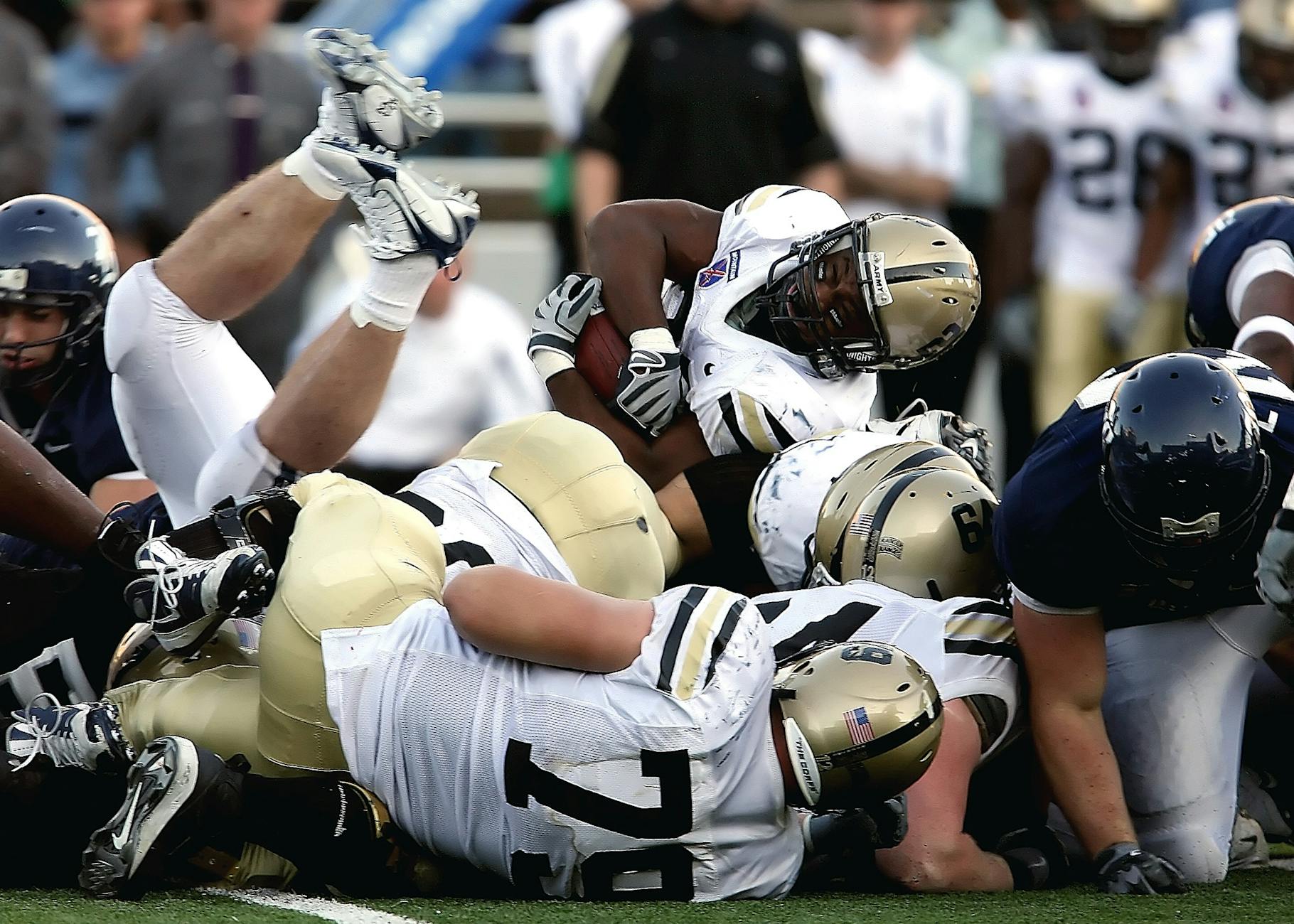
Photo by Pixabay on Pexels
For deeper tactical comparisons, connect this process with a structured player-statistics review.
[Internal Link: advanced player statistics guide]
If you are following the playoff race: map the path to January
The College Football Playoff is the decisive postseason route for leading FBS programs, but reaching it requires more than collecting attractive wins. Conference championships, strength of schedule, road results, losses against ranked opponents, and overall consistency influence selection discussions. The 2026 schedule reference lists CFP games from December 18 through January 27, while NCAA.com identifies the 2027 national championship for January 25 at Allegiant Stadium in Las Vegas.
The best playoff tracker has three columns:
- Resume quality: ranked wins, road victories, conference title, and schedule strength.
- Performance quality: efficiency, injury-adjusted form, and results against strong opponents.
- Risk factors: poor losses, quarterback uncertainty, defensive decline, and remaining schedule difficulty.
The contrarian point is that “must win” language is often too crude. A highly ranked team can survive one narrow road loss if its overall resume remains superior, while an undefeated team from a weaker schedule may need a dominant conference title performance to answer doubts. Do not confuse record with evidence. A 10-2 record against elite competition can be more informative than 12-0 against a schedule that offered little resistance.
Conference realignment makes this more complicated. The Big Ten and SEC attract national attention because of depth, resources, and large television audiences, but the ACC, Big 12, and other FBS conferences can produce playoff-relevant teams through difficult schedules and high-quality nonconference results. Notre Dame’s independent status creates a separate scheduling model, while programs such as Oregon, Indiana, Miami, and Ohio State may appear in national conversations for different reasons: returning production, transfer additions, coaching changes, or recent postseason performance.
NCAA.com’s national coverage highlighted Indiana’s 27-21 victory over Miami in the College Football Playoff National Championship Game reported in the reference material. That result illustrates why historical reputation cannot substitute for current evidence. A program’s past titles may sell merchandise; they do not tackle the quarterback in the present tense.
Want to compare tournament narratives with football forecasting principles?
Common pitfalls to avoid
The most common college football mistakes are predictable: treating rankings as objective truth, ignoring schedule strength, chasing large favorites, and assuming a recent result will repeat without examining how it happened. A team can win by 24 points while producing mediocre early-down efficiency if defensive touchdowns and short fields inflate the margin. Conversely, a narrow defeat can reveal a sound underlying performance against a superior opponent.
Avoid these errors:
- Overvaluing the AP ranking: polls measure consensus, not exact team strength.
- Ignoring injuries: quarterback and offensive-line absences can alter a matchup immediately.
- Using season averages without opponent adjustment: raw yards and points can mislead.
- Confusing neutral sites with home games: crowd composition and travel differ.
- Betting every nationally televised game: visibility is not value.
- Chasing losses: increasing stakes after a defeat converts analysis into emotional accounting.
- Assuming conference labels settle the argument: individual matchups still decide games.
Responsible gambling standards matter because college football offers an unusually large number of weekly markets. The National Council on Problem Gambling states that “gambling should be viewed as entertainment, not a way to make money,” a sensible rule that remains sensible even when a favorite is up 17 points at halftime. Use legal, regulated operators where available, set a fixed budget, and stop when the budget is gone. If gambling stops being recreational, consult local support services rather than attempting a heroic comeback.
Another information gain comes from tracking the actual number available to you. A published opening spread may have no relevance if your bookmaker offers a different price several hours later. Record kickoff time, line, odds, stake, and result; after 20 to 30 wagers, you can evaluate process quality instead of inventing a personality from three lucky Saturdays. Believe it or not — I do.
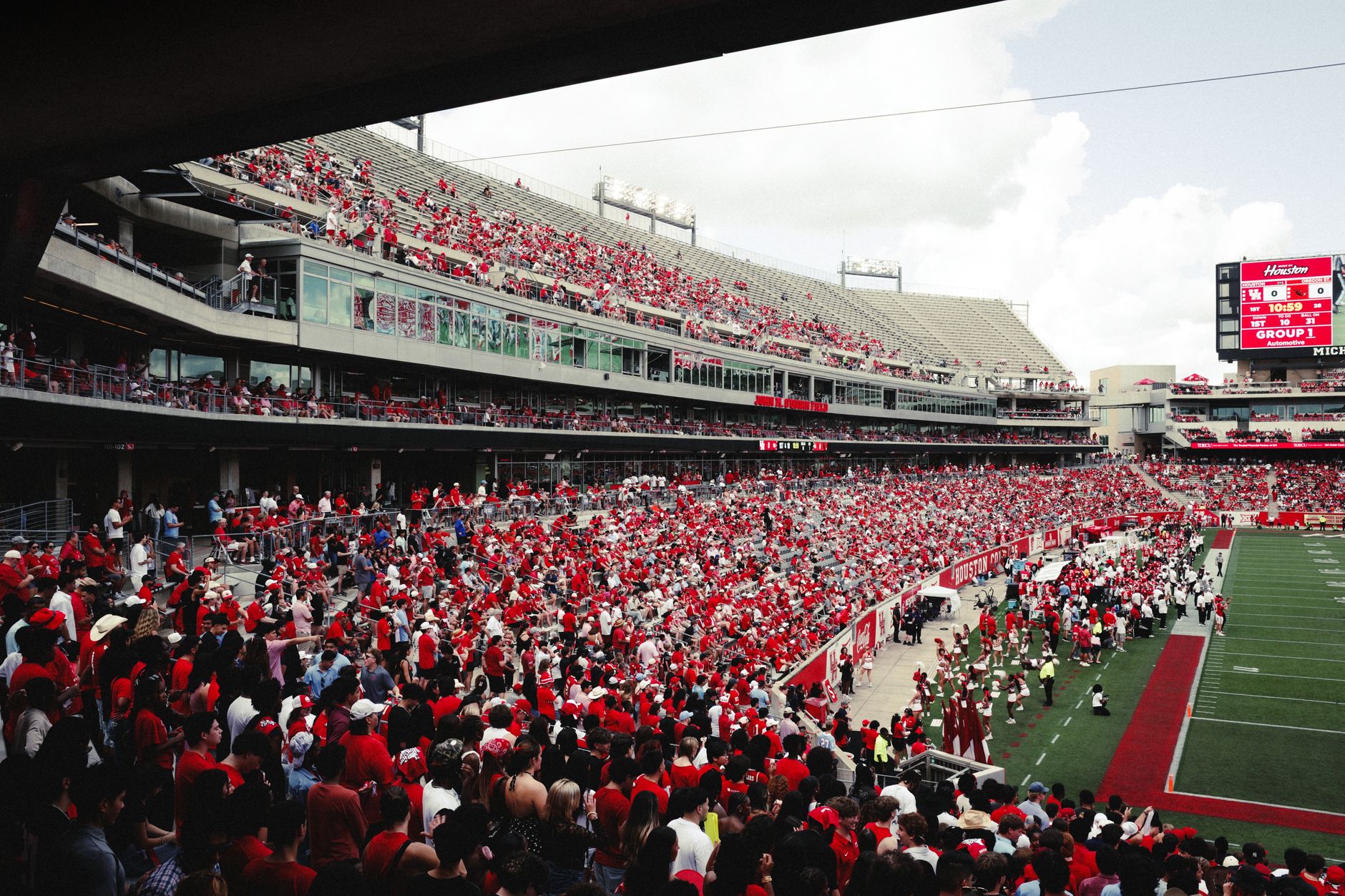
Photo by Eddie O. on Pexels
The 30-day check-in
A 30-day review is long enough to expose repeated habits but short enough to correct them before the season’s biggest games. Reassess each team’s quarterback health, offensive identity, defensive personnel, transfer contributions, conference position, and remaining schedule. Then compare your preseason assumptions with actual evidence from four or five games rather than defending an opinion because you wrote it down in August.
Use this monthly checklist:
- Quarterback status: starter, backup, injury recovery, or transfer adjustment.
- Line performance: pressure allowed, sack production, rushing success, and depth.
- Schedule difficulty: completed opponents versus remaining opponents.
- Game-state performance: results when leading, trailing, or playing from behind.
- Market accuracy: whether your projected spread differs consistently from closing lines.
- Financial discipline: total stakes, losses, wins, and whether limits were respected.
A particularly useful 30-day test is to compare first-half and full-game performance. Some teams script excellent opening drives but fade after defensive adjustments, while others improve late because their depth and conditioning are superior. Separating first-half totals, second-half scoring, and fourth-quarter success can identify a tactical pattern that a full-game average hides.
Do not overreact to one dramatic upset. Recalculate after a meaningful sample of games, preferably including road contests and opponents with different styles. Oregon’s tempo, Alabama’s physicality, Notre Dame’s independent schedule, and a Big 12 team’s pace may create entirely different evaluation problems. The goal is not to predict every result; it is to make fewer unsupported assumptions.
Goal Moments can be useful when you want broader sports analysis covering predictions, tactics, player data, and the 2026 FIFA World Cup. For college football, however, your primary sources should remain official schedules, NCAA statistics, trusted injury reporting, and transparent market prices.
[Internal Link: responsible sports analysis guide]
Ready to turn your next 30-day review into a repeatable research habit?
Frequently Asked Questions
Q: What is college football?
A: College football is American football played by university teams, primarily under NCAA governance in the United States. The highest-profile level is the FBS, which includes conferences such as the SEC, Big Ten, ACC, Big 12, and Mountain West. FCS programs compete at another Division I level with a distinct postseason championship structure. The season combines regular-season games, conference races, bowl eligibility, and the College Football Playoff.
Q: How do I follow the 2026 college football schedule?
A: Follow the 2026 schedule by using ESPN for weekly kickoff times, television listings, locations, odds, and conference filters, then verify major changes through NCAA.com and team websites. ESPN divides the regular season into Weeks 1 through 15 before bowl and CFP games continue into January 2027. International viewers should convert Eastern Time carefully and recheck daylight-saving changes. Record venue, travel, injuries, and broadcast information alongside each game.
Q: What is the difference between FBS and FCS college football?
A: FBS is the top NCAA Division I football level and leads to bowl games and the College Football Playoff, while FCS determines its champion through a larger playoff bracket. FBS programs generally receive greater national media attention and often have larger athletic budgets, although individual FCS teams can be highly competitive. The two levels may meet during the regular season, but their postseason systems remain different.
Q: Is college football betting worth it?
A: College football betting is only worth considering as paid entertainment, not as a dependable income strategy. Compare the actual odds available, account for injuries and opponent strength, and set a fixed budget before wagering. Large schedules create many opportunities, but they also encourage overbetting and emotional decisions. Use legal, regulated providers where available, record every wager, and stop if losses affect rent, debt, relationships, or daily expenses.
Q: Why do college football betting lines move?
A: College football lines move because sportsbooks and markets react to injuries, quarterback announcements, weather, sharp betting activity, public money, and new statistical information. A spread can change substantially after a starter is ruled out, especially when the replacement has limited experience. However, a later number may already include the news, so movement alone does not prove that the new price offers value. Compare opening, current, and closing lines whenever possible.
Q: How can I compare two college football teams accurately?
A: Compare two teams through opponent-adjusted efficiency, quarterback availability, line play, explosive plays, third-down performance, red-zone results, turnovers, and travel conditions. Review at least the last three games while separating opponent quality from raw statistics. Also examine whether the teams perform differently at home, on the road, or on neutral fields. A famous ranking is useful context, but it should never replace matchup-specific evidence.
Q: What should I review after 30 days of the college football season?
A: After 30 days, review quarterback health, offensive and defensive line performance, schedule strength, conference position, second-half results, and your own prediction or betting records. Compare preseason expectations with actual results across four or five games rather than reacting to one upset. If your projections consistently differ from closing lines, investigate the assumptions causing the gap. A monthly review turns college football following from casual opinion into a measurable process.
The next kickoff is only one data point. Track the entire season, check the details, and let the evidence do the shouting. Believe it or not — I do.